
SEARCH RESULTS Japanese Culture Search Criteria: 56 Hits 13 - 24
GoogleMap Loading...
-
 13
13Old Samurai Warriors’ Houses
On the west side of Shimabara Castle, the samurai residences have been carefully preserved, complete with clear spring water flowing in canals down the center of the streets. -
14
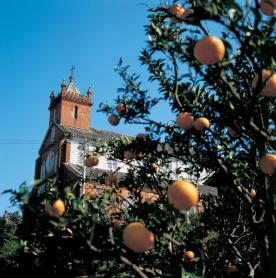
Kuroshima Church
Kuroshima Island is the largest of the Kujukushima islands. Two months after the discovery of the hidden Christians in Oura Cathedral in 1865, 20 representatives of the hidden Christians visited Father Petitjean in Oura to confess their faith. Subsequently, Father Poirier read the first mass in Kuroshima Island at the house of Daikichi Deguchi, one of the representatives. By 1873, Kuroshima had become an "island of Catholic." Kuroshima Church was constructed through the endeavors of Father Marman, with the self-sacrificing cooperation of the local laypeople. They carried bricks and other necessary materials by themselves, climbing up the steep slope from the beach.The interior of this church is magnificent, with arcades, triforia and clerestory. Kuroshima Church is unique in that Arita porcelain tiles, granite quarried in Kuroshima and other local materials are used. -
15
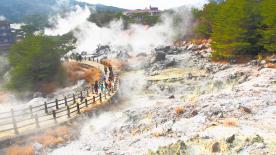
Unzen Hot Spring & Unzen Jigoku (“Unzen Hell”), the Site of Martyrdom at Unzen
Unzen Hot Spring: One and half-hour’s drive from Nagasaki City will take you to Unzen. As it was the country’s first resort targeted at foreign guests, you can also find Western- and Japanese-style hotels here. Now it is one of Japan’s most famous hot spring resorts. Unzen Jigoku (“Unzen Hell”): Hot water and gases spout out of the earth. White steam and a smell of sulfur accompany you as you walk through this hotspot of volcanic activity. The songs of the wild birds bring another aspect to the scene: in this place, nature shows both its fierceness and beauty in a fascinating spectacle. It was also a site where Christians were martyred. A document records that Matsukura Shigemasa, posted to the Shimabara domain, tortured Christians at so-called ‘hells’ in the mountains of Unzen. During the period between 1627 and 1632, Christians were tortured to death in the boiling waters of the hot springs. At a place called Oito Jigoku (‘Oito Hell’) stand two monuments to the victims, although the exact sites of the martyrdom are uncertain. -
16
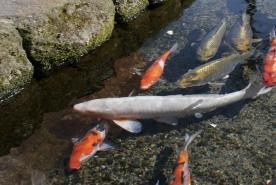
City of Swimming Carp
Shimabara has always been blessed with plentiful spring water. The “City of Swimming Carp” has been beautifully maintained by local people. The sight of the colorful nishikigoi carp swimming through the canals of the city is one of the most attractive features of Shimabara. -
 17
17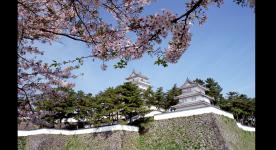
Shimabara Castle
At the castle, you can try on ninja and samurai armor and marvel at traditional crafts and documents of Christian and samurai history. It is also known as a perfect spot for taking pictures of a quintessential Japanese scene, the castle surrounded by flowers such as cherry blossoms and lotuses. -
18
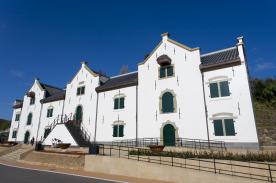
Hirado Dutch Trading Post
The Hirado Dutch Trading Post was located here from 1609 to 1641, when Hirado was the main international trading port of Japan. It included many different buildings but the 1639 warehouse is said to have been the first full-fledged western style building in Japan. This building has been carefully reconstructed and houses a museum that tells the international trading history of Hirado.The most unique exhibits include a Dutch suit of armor which was rearranged in Japanese style by a Samurai. -
19
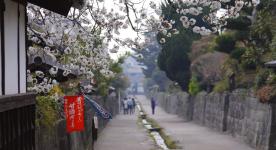
Old Samurai Warriors’ Houses
On the west side of Shimabara Castle, the samurai residences have been carefully preserved, complete with clear spring water flowing in canals down the center of the streets. -
20
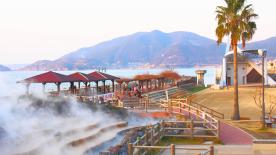
Obama Hot Spring & Hot Foot 105 (foot bath)
Obama is set against a backdrop of the magnificent Unzen mountains, facing the deep-blue Tachibana Bay. From the open-air hot spring, you can view the amazing sunset in the west. The red sun sinking into the crystal blue sea: how romantic! At 105 meters in length, this is the longest foot bath in Japan. It is equipped with steaming pots for cooking local seafood and vegetables over the natural steam from the hot springs, seated foot spas, foot baths you can walk along, and foot baths for pets. All are open to the public free of charge. -
21
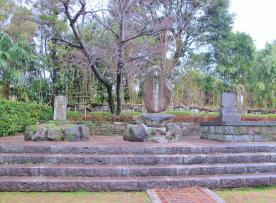
The Gravesite of William Adams
The first English citizen to arrive in Japan, Anjin Miura (Williams Adams' Japanese name) became a diplomatic adviser for the Tokugawa Shogunate. He also contributed to the trade between Hirado and England and the Netherlands. Every year in May a commemoration service is held in his honor. He is also known as the model of James Clavell's best-selling novel "Shogun". -
22
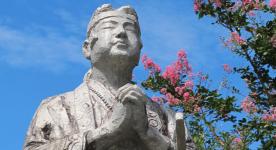
Remains of Hara Castle, Site of Shimabara-Amakusa Rebellion
The Matsukura clan, who gained control of the whole of Shimabara area (including the Arima domain once controlled by the Christian daimyo Harunobu Arima), imposed forced labor and excessive taxes on the local peasants of the area. Suffering from famine and overexertion, in 1637 the peasants of the Arima domain took up arms together with the peasants of Amakusa (who suffered from similar oppression) and revolted against their lords in what became known as the Shimabara-Amakusa Rebellion. Roughly 37,000 peasants gathered and were besieged at the site of Hara Castle, the castle of the Arima clan which had been dismantled under a law which allowed only one castle per province. The siege lasted for 88 days, and ended with the slaughter of every rebel, including women and children. Hara Castle was completely demolished after that, but archaeological investigation has revealed countless human bones, crucifixes and medallions. It is thought that the faith that had remained since the time of Harunobu Arima’s reign enabled the rebels to hold out at the castle site for so long both isolated and unaided. -
23

Kusuhara Church
Kusuhara was one of the remote areas settled by Sotome Christians around thelate-18th and early-19th centuries. Their descendants underwent ordeals even after the rediscovery of the Christians in Nagasaki. A roundup at Mizunohara expanded into the mountains. The hidden Christians were imprisoned and tortured and their settlements plundered. The site where they were jailed, near to the church, is open to the public. Around 1910, the present church was designed and constructed under the direction of Tetsukawa Yosuke. The building was repaired and improved in 1968. -
24
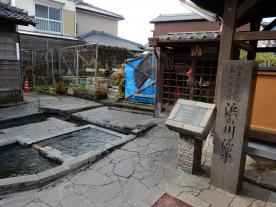
Hamanokawa Spring
Tucked away from the town's main thoroughfares, peaceful Hamanokawa spring is the source of the water used by Shimabara locals in their day to day lives. The water flows into four pools, each of which have a different use - such as water for cooking, or laundry. You can even try some of delicious the water from the first pool for yourself!