
SEARCH RESULTS Japanese Culture Search Criteria: 56 Hits 49 - 56
-
 49
49Fukusaiji
An impressively large Kannon (Goddess of Mercy) stands atop a mausoleum with a turtle-shaped roof, serenely watching over the streets of Nagasaki city at this distinctive temple. Fukusaiji, together with Kofukuji, Shofukuji, and Sofukuji, comprise the “four fortune temples of Nagasaki” (長崎四福寺). -
50
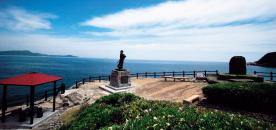
Ryoma Park & Ryoma Memorial
Sakamoto Ryoma’s companions met with a shipwreck at Shioyazaki on Nakadori Island. A wounded Ryoma, recovering from the Teradaya Incident, made his way to the island and commissioned for a memorial to be built at this spot. A statue of Ryoma with his hands pressed together in prayer now stands here, facing Shioyazaki. -
51
Suwa Shrine
The origins of Nagasaki’s Suwa Shrine can be traced back to the 1500s. Originally located at present day teramachi-dori (temple street), this shrine, together with other Buddhist and Shinto relics, was destroyed by the Christians. In an effort to revive the Shinto faith, Suwa Shrine was rebuilt in 1625 and relocated to its present location in 1648. The Nagasaki Kunchi Festival with over 380 years of history takes place here from October 7-9 annually and is one of the largest festivals in Japan. -
52
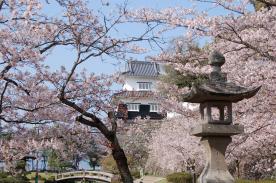
Omura Park
Omura Park was built over the outer moat of the former Kushima Castle. The park is filled with 300 blossoming cherry trees in spring and has been selected as one of “Japan’s Top 100 Cherry Blossom Spots”. Omura Sakura is said to be the most graceful cherry blossom with 60 to 100 petals per flower, while the ordinal cherry blossom has 5 petals. At the beginning of summer, some 300,000 irises bloom in the park. -
53
Isahaya park & Isahaya Meganebashi
In the park, visitors will see a 600 year old camphor tree, the Isahaya Meganebashi, different kinds of special plants and a former Takashiro Castle. In April, the azaleas in the park begin to bloom, and they hold a festival. Isahaya Meganebashi:After an enormous flood in Honmyougawa, this old stone bridge was moved to Isahaya. The care and detail taken in rebuilding the bridge are clearly evident. -
54
Sofukuji
While Kofukuji was called the Nankindera (Nanjing Temple) having been built by residents from Nanjing, China, Sofukuji was established by Chinese residents from Fujian Province. The temple’s striking red daiippomon (first gate) and daiyuhoden (main hall) are National Treasures of Japan (only 3 relics have been awarded this title in Nagasaki Prefecture, out of the 5 in Kyushu). On a more local level, 5 of the temple’s relics have been named Important Cultural Properties of Japan, 4 are Nagasaki Prefecture designated tangible cultural properties, and 10 are Nagasaki City designated tangible cultural properties. Vestiges of Ming Dynasty China can also be found in the temple’s Buddhist statues and altar equipment which were crafted by master craftsmen from China. This temple is truly a treasure trove of historical relics. Sofukuji, together with Kofukuji, Shofukuji and Fukusaiji comprise the “four fortune temples of Nagasaki” (長崎四福寺). -
55
Shofukuji
Shofukuji was established to honour a highly regarded priest Tesshindohan of Nagasaki. The temple stands as it has since its 1715 reconstruction, and is known for its temple bell built in 1718. Many of the temple’s relics have been designated city or prefectural cultural assets. Shofukuji, together with Kofukuji, Sofukuji and Fukusaiji comprise the “four fortune temples of Nagasaki” (長崎四福寺). -
 56
56Omura Nagoshi Summer Festival
The festival kicks off with a fireworks display at 9pm on the evening of August 1st, with the main festival following on August 2nd and 3rd. The main festival is held from about 4pm to 10pm on August 2nd and 3rd, and enjoy performances ranging from taiko drumming to traditional performing arts. The night markets are also a highlight. The venue for the main festival is the plaza right outside JR Omura Station.