
SEARCH RESULTS Japanese Culture Search Criteria: 56 Hits 1 - 12
-
 1
1Sotome Museum of History and Folklore
This museum features two floors of exhibits that showcase the rich and unique history of Sotome. From tools and machines used in olden Japan to artifacts collected from the Hidden Christian era, the Sotome Museum of History and Folklore is a record of the development of society, cultural exchange, and tragedy of the Christian persecution in Japan. English brochures are available for the first floor exhibits on tools and machinery and although none are for the second floor hidden Christian artifacts, it is worth a look for visitors interested in the Christian heritage of Nagasaki. You can listen to a recording of orasho (prayers by hidden Christians passed down through the generations) on the second floor. -
2

Omura Sumitada Historical Park
Omura Sumitada was Japan’s first Christian Daimyo (Samurai war lord), who with foresight and vision sent a group of young Japanese emissaries to Rome (known as the “Tensho Embassy”).This park was built at the residence where Omura Sunitada breathed his last breath. A garden with a fountain and its clean flow of water still remains as the core attraction of the park. Visitors can learn some historical facts about Sumitada including details of local Japanese Christians and trading with the West. -
3
Matsura Historical Museum
The Matsura Historical Museum houses the impressive residence of the Matsura clan, who ruled the island from the 11th to 19th century, and prospered through international trading. Inside the museum, you can dress up in samurai armor or a Japanese Kimono and enjoy the treasures of the Matsura. You can also enjoy an original warrior-style green tea and authentic sweets with its 400 years of tradition at a thatch-roofed tea ceremony house located at the side, in a very quiet natural setting, where you can only hear the songs of the birds and the bamboo. On the other side of the museum, there is a café in a Japanese-style building, furnished with Western furniture. -
4

Banshoin
This Buddhist temple was built in 1615 by the Soh family, rulers of Tsushima Island during the Edo Period. This is the location of one of the three largest graveyards in Japan. -
5

Kofukuji
Kofukuji is the oldest Chinese Obaku Zen temple in Japan. It traces its humble origins to a small hermitage built in 1620 to pray for the safety of sea voyages, frequent between China and Nagasaki at the time. The temple stands out along teramachi-dori (temple street) due to its impressive red gate. Many important Zen masters have stayed at this temple, including the founder of Obaku Zen Buddhism Ingen, Mokusu Nyojo who built the nearby megane-bashi (spectacles bridge), and Itsunen who introduced a new style of Chinese painting to Japan. Kofukuji’s significance in Japan’s Buddhist history is greatly treasured and protected by Nagasaki Prefecture. Many relics on the temple grounds have been deemed cultural assets of the prefecture and city. The temple itself is an Important Cultural Property of Japan. Visitors can taste Buddhist Vegetarian cuisine here, or enjoy Japanese green tea and sweets in the tea house next to the garden. Kofukuji, together with Sofukuji, Shofukuji and Fukusaiji comprise the “four fortune temples of Nagasaki” (長崎四福寺). -
6

Teramachi-dori (Temple Street)
Tracing their histories some 400 years back, many old temples line teramachi-dori - Nagasaki’s famous temple street. In the 16th and early 17th century, Nagasaki was a hub of international trade, with European and Chinese traders frequenting its ports, bringing goods from around the world. Chinese traders were the largest group and many lived in Nagasaki, establishing temples based on their hometowns. The ruling shogunate which had been tightening control over the region greatly supported Buddhism and the building of temples over the influence of Christianity, enabling Buddhism to thrive in Nagasaki. Well-known temples along this street include Kofukuji and Sofukuji - two of the “four fortune temples” of Nagasaki. Many of these temples or their relics have been classed as cultural assets of the city or prefecture, and even national treasures. -
 7
7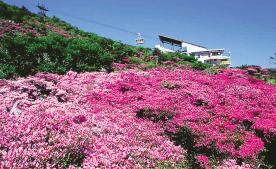
Nita Pass, Unzen
These mountains are famous for their azaleas in the spring, green colors in the summer, autumn leaves in the fall, and frosty fog in the winter. Enjoy the cable-car ride up to the top for breathtaking views. A brand new trekking path allows hikers to enjoy the mountain flowers and wild birds, as well as stunning close-up views of Heisei Shinzan, the peak newly-formed by the 1990s Fugendake eruption. -
8

Haru-no-Tsuji Ruins
The archeological remains at Haru-no-Tsuji are located on a flat plain between Ishida Town and Ashibe Town. The area has provided important insights into life during the Yayoi Period (approx 300BC - 300AD) and has been designated as a site of National Historical Interest. The moated settlement is regarded as the location of the ancient capital of Iki, a country that existed in that period. It appears in a Chinese historical text “The Records of the Three Kingdoms”, as the oldest kingdom in Japan. 17 buildings have been restored at the site. -
9
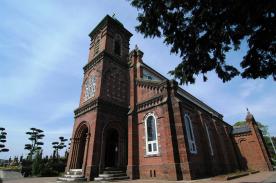
Tabira Church
The church was designed by Tetsukawa Yosuke, a famous architect of various churches in Nagasaki Prefecture, and built between December 1915 and October 1917. It is one of the latest brick churches in the prefecture of Nagasaki. Tetsukawa Yosuke has called this one of his best works. -
10
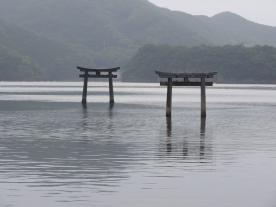
Watazumi Shrine
A mysterious sea shrine with five torii gates which extend in a line from the ocean. Two of the torii are in the sea, changing their appearance with the ebb and flow of the tide, recalling the legendary tales of the Dragon Kingdom. If you rent a kayak at the Shinwa-no-Sato Nature Park, you can sea-kayak toward the shrine. -
11

Hirado Castle
Hirado Castle offers a commanding view of Hirado Port and the ancient forest of Kurokojima Island. Its museum contains many valuable relics dating back to the Hirado’s feudal past. -
12
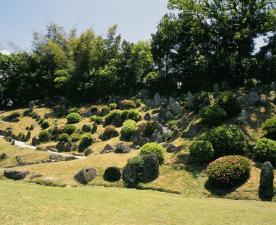
Stone Garden of the Former Enyu-ji Temple
Enyu-ji Temple was built by the fourth domain chief Suminaga in 1652. Designed in the “stone garden” style of the early days of the Edo period, the garden uses a variety of stone combinations with over 400 stones along a slope stretching some 50 meter east-west. Reminiscent of the original grandeur of the garden, it also features a gardening concept that simulates a san-sui (mountain-water) landscape painting with water flows simulated by white pebble stones, and dry falls and flows created using the natural topography.