
SEARCH RESULTS Search Criteria: 165 Hits 13 - 24
GoogleMap Loading...
-
 13
13
Teramachi-dori (Temple Street)
Tracing their histories some 400 years back, many old temples line teramachi-dori - Nagasaki’s famous temple street. In the 16th and early 17th century, Nagasaki was a hub of international trade, with European and Chinese traders frequenting its ports, bringing goods from around the world. Chinese traders were the largest group and many lived in Nagasaki, establishing temples based on their hometowns. The ruling shogunate which had been tightening control over the region greatly supported Buddhism and the building of temples over the influence of Christianity, enabling Buddhism to thrive in Nagasaki. Well-known temples along this street include Kofukuji and Sofukuji - two of the “four fortune temples” of Nagasaki. Many of these temples or their relics have been classed as cultural assets of the city or prefecture, and even national treasures. -
 14
14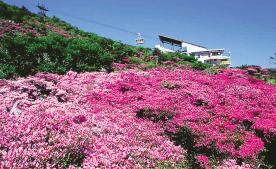
Nita Pass, Unzen
These mountains are famous for their azaleas in the spring, green colors in the summer, autumn leaves in the fall, and frosty fog in the winter. Enjoy the cable-car ride up to the top for breathtaking views. A brand new trekking path allows hikers to enjoy the mountain flowers and wild birds, as well as stunning close-up views of Heisei Shinzan, the peak newly-formed by the 1990s Fugendake eruption. -
15

Haru-no-Tsuji Ruins
The archeological remains at Haru-no-Tsuji are located on a flat plain between Ishida Town and Ashibe Town. The area has provided important insights into life during the Yayoi Period (approx 300BC - 300AD) and has been designated as a site of National Historical Interest. The moated settlement is regarded as the location of the ancient capital of Iki, a country that existed in that period. It appears in a Chinese historical text “The Records of the Three Kingdoms”, as the oldest kingdom in Japan. 17 buildings have been restored at the site. -
16

Osezaki Lighthouse
This white lighthouse is located at Osezaki Cliff, which was formed by erosion from the wild waves of the East China Sea. The combination of the lighthouse, the cliff and the surrounding natural environment presents a spectacular view. -
17
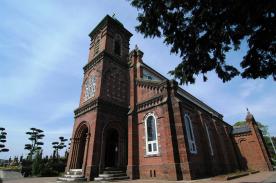
Tabira Church
The church was designed by Tetsukawa Yosuke, a famous architect of various churches in Nagasaki Prefecture, and built between December 1915 and October 1917. It is one of the latest brick churches in the prefecture of Nagasaki. Tetsukawa Yosuke has called this one of his best works. -
18

St. Francis Xavier Memorial Church, a view of a Christian Church and Japanese Temples
Constructed in 1913 as the Hirado Catholic Church, it was relocated to its present site in 1931. The statue of St. Francis was erected in 1971 to to honour the missionary’s visit to Hirado in 1550, and the church later given its present name. An exotic view of a Japanese temples with this church from a street down to the town was described by the Lonly Planet as "one of the most photogenic vantage points in all of Khushu." -
19
Nagasaki Shinchi Chinatown
Nagasaki Chinatown, located in Nagasaki City is one of the three largest Chinatowns in Japan, alongside those in Yokohama and Kobe. This area is now a popular sightseeing spot for original Nagasaki-style Chinese food and the Nagasaki Lantern Festival, the largest Chinese New Year celebration in Japan. During the national isolation period, Nagasaki Port was opened as an exception for trade with China from 1635. Chinese could reside around Nagasaki City until 1689 when the feudal lord decided to restrict them to a specific ‘Chinatown’ in order to combat commercial fraud. No Japanese citizens were allowed to enter the Chinatown area except geisha and monks, although Chinese people were able to leave to visit the Chinese temples in Nagasaki City, thus transporting Chinese culture to the local Nagasaki people. Trade goods included silk, sugar, medicines and books. Moreover, Chinese culture had a great influence on the people of Nagasaki. Since then, Nagasaki has enjoyed famous Chinese-influenced events year-round, including ‘Shourou Nagashi’ (the Spirit Boat Procession), the Nagasaki Peiron (dragon boat) Championship and the Dragon Dance performed at various festivals. After 1859, with the opening of Japan to foreign countries, the Chinese residents in Nagasaki transferred to Shinchi Town where the current Chinatown is located. Along the 250m of streets meeting at a crossroads, there are about 40 restaurants serving Champon and Saraudon, the famous Nagasaki Chinese cuisine, as well as souvenir shops. This area is popular for tourists especially when decorated with thousands of lanterns during the Lantern Festival. -
20
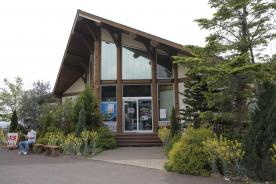
Omura Yume Farm ChouChou
This facility offers agricultural experiences including picking strawberries, baking bread, cooking sweets and sausages. Barbecue restaurants, farm stands, bakery shops and ice cream shops are popular for visitors. -
21
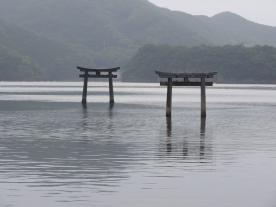
Watazumi Shrine
A mysterious sea shrine with five torii gates which extend in a line from the ocean. Two of the torii are in the sea, changing their appearance with the ebb and flow of the tide, recalling the legendary tales of the Dragon Kingdom. If you rent a kayak at the Shinwa-no-Sato Nature Park, you can sea-kayak toward the shrine. -
22

Hirado Castle
Hirado Castle offers a commanding view of Hirado Port and the ancient forest of Kurokojima Island. Its museum contains many valuable relics dating back to the Hirado’s feudal past. -
23
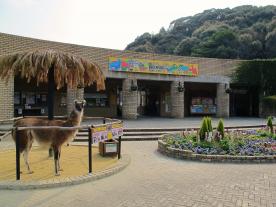
Nagasaki BioPark
The BioPark is a truly unique experience, with wild animals allowed to roam and interact with visitors. Located not far from Nagasaki City, the BioPark offers guests the opportunity to feed the animals. Hand-feeding adorable animals like red pandas, capuchin monkeys and capybaras is an unforgettable experience to enjoy and learn from. Recently, the hippo family has had a new calf, named Momo, which means ‘peach’. Make sure to visit this cute little baby and feed her. -
24
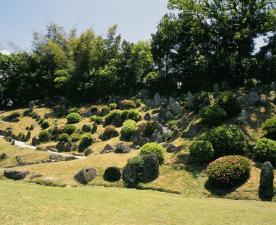
Stone Garden of the Former Enyu-ji Temple
Enyu-ji Temple was built by the fourth domain chief Suminaga in 1652. Designed in the “stone garden” style of the early days of the Edo period, the garden uses a variety of stone combinations with over 400 stones along a slope stretching some 50 meter east-west. Reminiscent of the original grandeur of the garden, it also features a gardening concept that simulates a san-sui (mountain-water) landscape painting with water flows simulated by white pebble stones, and dry falls and flows created using the natural topography.