
SEARCH RESULTS Search Criteria: 165 Hits 73 - 84
GoogleMap Loading...
-

 73
73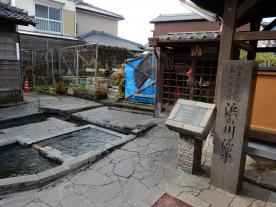
Hamanokawa Spring
Tucked away from the town's main thoroughfares, peaceful Hamanokawa spring is the source of the water used by Shimabara locals in their day to day lives. The water flows into four pools, each of which have a different use - such as water for cooking, or laundry. You can even try some of delicious the water from the first pool for yourself! -
74
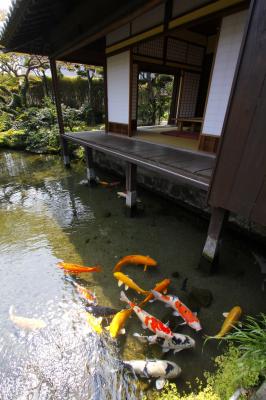
Shimeiso Spring Garden
Enjoy a cup of green tea with a beautiful view in the Shimeisho Spring Garden 四明荘. Guests can drink tea sitting in a house built over the large pond of rich local spring water, and watch the large, colourful carp swimming through the open sliding doors. This is one of Shimabara’s most peaceful spots, and is a perfect place to take a rest before you continue sightseeing. There’s no charge, although donations are welcome. -
75
Shimabara Yuusuikan
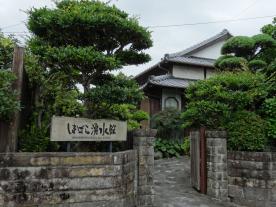
Kanzarashi, small dumplings made of rice flour served soaked in a light syrup with spring water, are a Shimabara specialty. You can eat them at many places in Shimabara, and you can also make them yourself at Shimabara Yuusuikan. Once you have rolled the rice flour into dumplings and cooked them in spring water, you can eat them in a traditional Japanese tatami room overlooking a peaceful garden. Then, you’ll be invited to mark your hometown on a world map with a pin and presented with personalised certificate showing that you are a master of kanzarashi making! -
76
Senkoji
Escape from the hustle and bustle of everyday life, and try Zen Buddhism meditation at Senkoji 千光寺, a Buddhist temple in Hirado. Here, you can have the opportunity to be a part of a true Zen experience, all for the price of 500 yen. Zen Buddhism has a long history. It originated in China during the Tang Dynasty (618-907) and it was brought to Japan during the Song Dynasty (960-1279) by Myoan Ensai, who was the first Japanese Zen Buddhist monk. After your meditation, you’ll be invited for some tea and refreshments. As well as bringing Zen Buddhism, Ensai also brought and cultivated the first green tea leaves in Japan. This tea is specially grown in the gardens of Senkoji, Fushun-en, by the monks, and is a truly delicious way to end your experience. -
77
To No Sumi Waterfall
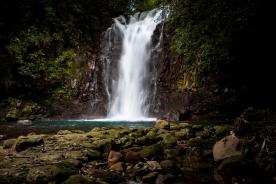
According to its abundancy of water and the size of its gorge, To No Sumi Waterfall is considered the biggest waterfall in Nagasaki prefecture. Every year on May 4th, there is a festival that takes place next to the waterfall. While there, many visitors can enjoy the refreshing taste of somen nagashi, where somen noodles flow in moving water collected inside a bamboo stock and have to be fished out with chopsticks in order to be eaten). -
78
Mount Iwado
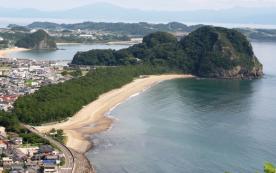
Mount Iwado is a piece of land facing the sea, shaped as a mountain island. It is a natural viewpoint. In the past, it was worshipped as the holy place of the Goddess Kannon. In 1928, Mount Iwado was nominated and made a National Natural Treasure, because among its 190 types of plants that naturally grow there, many of them are considered rare and precious species. It has been called “Mount Iwado with plants and trees that grow in a warm climate”. -
79
Futagoiwa Rock
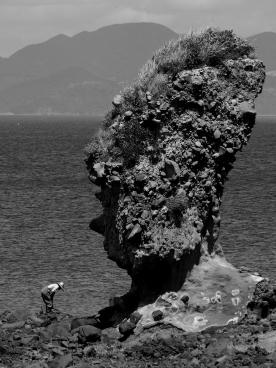
Located along National Road 251 in the Tsubami area of Kazusa, Futagoiwa Rock is shaped like a human head and looks like a “Moai.” This rock was formed by wave erosion of debris flow deposits that flew down from the Unzen volcano near the Kunisaki Peninsula. Futago means “twins,” as in the past another similar rock stood next to it. However, it collapsed after a strong earthquake hit in 1922. -
80

Anakannon Cave
Anakannon is a cave inside Mount Iwado. This is the place where it is told that in 1582 the Christian priests, who held the higher ranks such as Gaspar Coelho and Luis Fróis, assaulted the Buddhists hidden inside. They burned and destroyed the Buddhist statues that were too big to be transported elsewhere. The remaining Buddhist statues were taken to the monastery in Kuchinotsu and set on fire. -
81
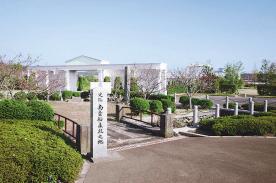
Location of the Arrival of the Nanban Ships
In 1567, after the arrival of three Portuguese ships led by Captain Tristão Vaz Da Veiga, Kuchinotsu Port started to trade with the West and began to flourish. In 1579, Father Valignano arrived on the ship of Captain Leonel De Brito. This led Kuchinotsu to not only become the center from whence Christianity spread, but to also become famous worldwide as the gate between Western and Eastern cultures. The excellence of Kuchinotsu Port was documented at that time, a report declars “there is no other comfortable and safe port, protected by the wind in all four directions. Kuchinotsu Port is better than Omura (Fukuda) Port, because there it’s possible to anchor freely and stay the night.” -
82

Go no Kura Shimabara Ikki Mura Furuse ‒ Somen Noodles Factory
Outside this beautiful white building a bold somen signboard stands out. This factory reflects the passion of its owner for antiques and the nostalgic, with a waterwheel along the road in front of the shop. A relaxing atmosphere welcomes customers. -
83
Yon no Kura Yamakome – Soy Sauce and Miso Brewing Factory
For those fond of old traditional Japanese style houses, this one can’t be missed. The central pillar of the structure of this brewery is made of the trunk of a cherry tree. In the courtyard, there grows a magnificent plum tree. The house itself is provided with every luxury. The fence surrounding the property is similar to one of a castle, which adds to the house’s charm. -
84
San no Kura Kiyoya - Soy Sauce and Miso Brewing Factory
This is a miso and soy sauce brewery, however it also offers a soft ice cream with a special taste. The signboard of this miso brewery was designed based on the beautifully written characters of the chairperson who started the business.