
SEARCH RESULTS History Search Criteria: 105 Hits 25 - 36
GoogleMap Loading...
-
 25
25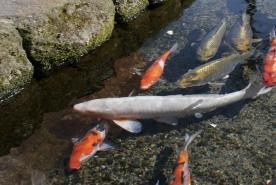
City of Swimming Carp
Shimabara has always been blessed with plentiful spring water. The “City of Swimming Carp” has been beautifully maintained by local people. The sight of the colorful nishikigoi carp swimming through the canals of the city is one of the most attractive features of Shimabara. -
 26
26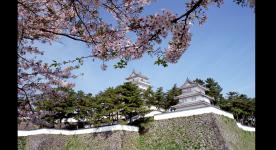
Shimabara Castle
At the castle, you can try on ninja and samurai armor and marvel at traditional crafts and documents of Christian and samurai history. It is also known as a perfect spot for taking pictures of a quintessential Japanese scene, the castle surrounded by flowers such as cherry blossoms and lotuses. -
27
Hirado Dutch Trading Post
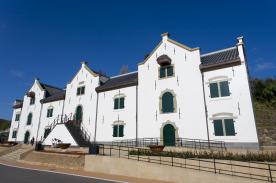
The Hirado Dutch Trading Post was located here from 1609 to 1641, when Hirado was the main international trading port of Japan. It included many different buildings but the 1639 warehouse is said to have been the first full-fledged western style building in Japan. This building has been carefully reconstructed and houses a museum that tells the international trading history of Hirado.The most unique exhibits include a Dutch suit of armor which was rearranged in Japanese style by a Samurai. -
28
Old Samurai Warriors’ Houses
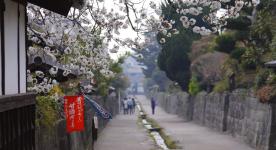
On the west side of Shimabara Castle, the samurai residences have been carefully preserved, complete with clear spring water flowing in canals down the center of the streets. -
29
Peace Park
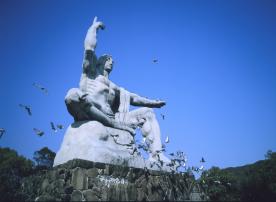
The Peace Park was founded with the desire for world peace in mind. After the atomic bomb exploded, it was said that grass and trees would not grow on this spot for 75 years. However, this park is currently full of trees, flowers and art works donated by countries all over the world in support of the city’s prayer for peace. The Peace Statue, a symbol of Nagasaki as a city of peace, was created by sculptor Seibo Kitamura, a Nagasaki native. The raised right hand pointing to the sky depicts the threat of the atomic bomb, and the left hand stretching horizontally symbolizes eternal world peace, while the slightly closed eyes express a prayer asking that the souls of the victims may find rest. A poem is carved into a memorial plate in front of the park’s fountain, written by a child who suffered from thirst in the immediate aftermath of the bombing. The fountain, brimming with water, is an offering to all those who lost their strength before they could drink a single drop. Every year, a Peace Memorial Ceremony is conducted in front of this statue. -
30
Obama Hot Spring & Hot Foot 105 (foot bath)
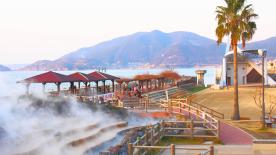
Obama is set against a backdrop of the magnificent Unzen mountains, facing the deep-blue Tachibana Bay. From the open-air hot spring, you can view the amazing sunset in the west. The red sun sinking into the crystal blue sea: how romantic! At 105 meters in length, this is the longest foot bath in Japan. It is equipped with steaming pots for cooking local seafood and vegetables over the natural steam from the hot springs, seated foot spas, foot baths you can walk along, and foot baths for pets. All are open to the public free of charge. -
31
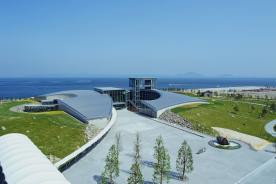
Unzen Disaster Memorial Hall
This is the only museum in the world where one can experience a simulated volcanic eruption, and learn about the damage caused by the disaster and the efforts for recovery. The Memorial Park of Houses Destroyed by the Debris Flow is located nearby. -
32
Confucian Shrine & Historical Museum of China
This shrine is the only one of its kind to have been built by Chinese people outside of China. The Historical Museum of China is also located here and showcases many Chinese national cultural treasures. -
33
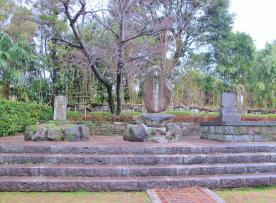
The Gravesite of William Adams
The first English citizen to arrive in Japan, Anjin Miura (Williams Adams' Japanese name) became a diplomatic adviser for the Tokugawa Shogunate. He also contributed to the trade between Hirado and England and the Netherlands. Every year in May a commemoration service is held in his honor. He is also known as the model of James Clavell's best-selling novel "Shogun". -
34
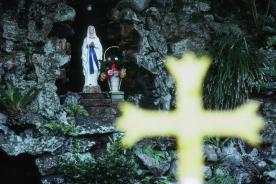
Imochiura Church and Lourdes
This church was constructed under the direction of French missionary Father Peroud. Located near the church is the first Lourdes grotto in Japan, which was built in response to Father Peroud’s exhortation, and modeled after the Massabielle Grotto in Lourdes in the south of France. -
35
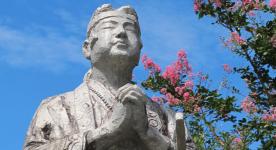
Remains of Hara Castle, Site of Shimabara-Amakusa Rebellion
The Matsukura clan, who gained control of the whole of Shimabara area (including the Arima domain once controlled by the Christian daimyo Harunobu Arima), imposed forced labor and excessive taxes on the local peasants of the area. Suffering from famine and overexertion, in 1637 the peasants of the Arima domain took up arms together with the peasants of Amakusa (who suffered from similar oppression) and revolted against their lords in what became known as the Shimabara-Amakusa Rebellion. Roughly 37,000 peasants gathered and were besieged at the site of Hara Castle, the castle of the Arima clan which had been dismantled under a law which allowed only one castle per province. The siege lasted for 88 days, and ended with the slaughter of every rebel, including women and children. Hara Castle was completely demolished after that, but archaeological investigation has revealed countless human bones, crucifixes and medallions. It is thought that the faith that had remained since the time of Harunobu Arima’s reign enabled the rebels to hold out at the castle site for so long both isolated and unaided. -
36

Aosagaura Church
The Aosagaura area was settled by Christians from Sotome, who battled harsh living conditions and severe oppression until the ban on Christianity was lifted in 1873. In 1878, they were finally able to build their church, taking charge of missionary work in the whole upper-Goto region. In 1910, a third church building, designed by Tetsukawa Yosuke, reached completion thanks to the hard work of the parishioners, young and old, male and female, who dedicated themselves to tasks such as carrying bricks from boats on the shore uphill to the construction site. Tetsukawa Yosuke had taken part in the construction of Dozaki Church as an apprentice. In 2001, Aosagaura Church was designated a national cultural asset.