
SEARCH RESULTS History Search Criteria: 105 Hits 61 - 72
GoogleMap Loading...
-
 61
61Fukae Archeological Research and Volcanic Eruption Disaster Museum
This museum exhibits pre-historical relics such as pottery, beads and stone tools from the Jomon Period (11000 BCE-ca 300 BCE) and the Yayoi Period (300 BC to AD 300). -
62
Ruins of the Former Onokoba Elementary School
The massive volcanic eruption of Mount Unzen on September 15th 1991, caused severe damage to the Onokoba Elementary School. The building has been preserved intact to pass down the memory of the violent impact of the pyroclastic flow. -
63

Onokoba Soil-Erosion Control Station
The Onokoba Soil-Erosion Control Station displays images of the damage caused by the1992 volcanic eruption of Mount Unzen. The windows in the higher floors offer a closer view of the volcano and the route of the debris flow. -
64
Christian Tombstone
This Christian tombstone has a semi-cylindrical stone type lid, presenting onlookers with a beautiful symmetrical shape. The characteristic of this tombstone are the cross and the epigraph inscribed on it. Across the top of the lid there is a flower cross inscribed. On the front there is a double relieved surface and inside it a clover cross is carved. In the back another edge is double relieved and in the inside there is a wedge cross and few words written in the Roman alphabet. This is the oldest inscription of Roman letters in Japan. It is also the oldest inscription in Japan with a mixture of Christian and Japanese chronologies. This tombstone was discovered in 1929 after underground excavations were conducted. On July 24, 1959, the tombstone was recognized as an historic site designated by the national government. -
65
Ichi no Kura - Yoshida Sake Brewery
Established in 1917, Yoshida Sake Brewery’s landmarks are a huge sake barrel and a blue flag of its most popular sake "shibori hanegi" (squeezed hanegi), which can be seen outside of the brewery. In the backroom, immersed in a traditional Japanese style room with the view of a Japanese garden, there is cafe called Yachiyo (open only on weekends April – December). -
66
Hinoe Castle Ruins
Hinoe Castle was the residence of the Arima clan and it was told to be built during the Period of the Northern and Southern Courts (1336-1392). The castle was formed by a main building constructed next to the tip of a small hill about 78 m high, oriented north-south to the hill. In the east, there was the second palace and the Oteguchi Gate. In the west side stood the third palace. The building was told to have had many rooms, a garden and a tea room. Archeological excavations brought to light the stone wall, the relics of a staircase and many ceramic wares. The staircase is a 100 meters long and connects what it is presumed to have been the entrance of the castle and the main palace. It appears to be very similar to the stairs of Azuchi Castle in the Shiga Prefecture. Even a toribusuma (a tile that sticks out from the side of the roof) decorated with a gold foil has been excavated. This kind of roof tile has been noted to have been granted by Toyotomi Hideyoshi. This reveals a political connection to the central government, meaning that the castle had great authority in the area. In July 3, 1982, the castle ruins were designated a Historic Site by the National Government. -
67

Hara Castle Ruins
Hara Castle is said to have been built by the feudal Lord Arima Takazumi in 1496. Its influence extended to the Eastern area of Hizen Domain (currently Saga Prefecture) and counted an income of 26,000 koku* . The castle spanned a 4 km² wide area, with three of its sides surrounded by the sea. Therefore, it was considered a naturally impregnable fortress. The castle was divided into 4 separate palaces: the main palace, the second, the third and the Amakusa palace. Due to its beautiful position it was also referred to as the “Sunset Castle.” Matsukura Shigemasa, the feudal Lord of Yamato Gojo Domain released the ikkoku ichijo rei (Law of One Castle per Province), so Moritake Castle (i.e. Shimabara Castle) was constructed, leading Hara Castle and Hinoe Castle to be abolished. The site of Hara Castle is widely known as the place where the Shimabara-Amakusa Revolt happened (1637-1638). In May 30, 1938, it was designated as a National Historical Site. *Koku: In feudal Japan, the incomes of samurai were measured in koku of rice. A koku of rice was considered to be the amount needed to feed one man for one year. To be a daimyo, a samurai needed an annual income of 10,000 or more koku; an income of 26,000 koku proofs how wealthy the Arima clan was. -
68

Seibo Kitamura Memorial Hall
Seibo Kitamura is the sculptor of the Peace Monument located in Nagasaki City’s Peace Park. His birthplace displays about 60 pieces of his carvings and calligraphy. In the hall’s garden it is possible to see a replica of the Peace Monument at one-fourth of its original size. -
69
Arima Christian Heritage Museum
The ruins of Hinoe and Hara Castles, located in Minamishimabara, are part of the ‘Churches and Christian Sites in Nagasaki’, included on UNESCO’s tentative list of World Heritage sites. Minamishimabara has established the Arima Christian Heritage Museum with the purpose of promoting the inscription of the collection of sites on the World Heritage List. Both of these historical places give testimony to both the light and dark sides of Nagasaki Prefecture’s Christian history. They represent a valuable memory transmitted through generations. Their tale, handed down only in this very limited area, is just a tiny piece of the vast puzzle of world history, but the flowering of Christian culture and the subsequent religious persecution causing followers to go into hiding, until the faith’s eventual revival, constitute a theme that runs through human history. The Arima Christian Heritage Museum exhibits 250 years of Christian history showing its propagation, prosperity and suppression, ending in the Shimabara-Amakusa revolt. -
70
Kuchinotsu Museum of History and Folklore & Marine Museum
The Kuchinotsu Museum of History and Folklore is the only remaining Western-style building in Kuchinotsu from the Meiji Era. It displays various materials representing the prosperity of the once world-famous port of Kuchinotsu after the arrival of Western ships. -
 71
71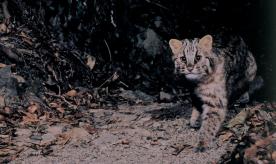
Tsushima Wildlife Conservation Centre
Remote and beautiful Tsushima, located closer to Korea than it is to Japan, boasts a truly special natural environment. Almost 90% of the island’s surface is covered in forests, and the world’s northernmost coral reef was discovered off its coast in 2012. Its unique ecological system also means that Tsushima is home to wild animals which can’t be found anywhere else in the world. Perhaps the most famous of these is the Tsushima leopard cat, thought to have arrived from the Asian continent over 100,000 years ago. These days, the population of the Tsushima leopard cat is sadly declining due to road kills and changes to its natural habitat. In 1994, the Japanese government designated it as a National Endangered species. The Tsushima Wildlife Conservation Center works to protect not only the Tsushima leopard cat, but all of Tsushima’s rare wildlife. As well as carrying out ecological research and public awareness work to protect the island’s natural environment, the center also holds events, and offers the opportunity to meet a real leopard cat! -
72
Goto Camellia Oil Extraction Experience
Known as the beauty secret of youthful Geisha, Camellia or Tsubaki oil is one of the Goto Islands’ most precious exports. The highly valuable oil has long been recognized in East Asia for its highly restorative and rejuvenating effect on skin, hair, and nails. While opportunities to witness the extraction process are rare, the Tsubaki Taiken Workshop in Shin-Kamigoto offers hands-on experiences throughout the year. Workshops last between sixty and ninety minutes, giving visitors a chance to crush and press the Camellia seeds for oil themselves.