
SEARCH RESULTS Architecture and Landscape Search Criteria: 114 Hits 61 - 72
GoogleMap Loading...
-
 61
61Senkoji
Escape from the hustle and bustle of everyday life, and try Zen Buddhism meditation at Senkoji 千光寺, a Buddhist temple in Hirado. Here, you can have the opportunity to be a part of a true Zen experience, all for the price of 500 yen. Zen Buddhism has a long history. It originated in China during the Tang Dynasty (618-907) and it was brought to Japan during the Song Dynasty (960-1279) by Myoan Ensai, who was the first Japanese Zen Buddhist monk. After your meditation, you’ll be invited for some tea and refreshments. As well as bringing Zen Buddhism, Ensai also brought and cultivated the first green tea leaves in Japan. This tea is specially grown in the gardens of Senkoji, Fushun-en, by the monks, and is a truly delicious way to end your experience. -
62
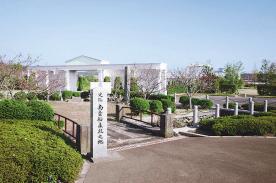
Location of the Arrival of the Nanban Ships
In 1567, after the arrival of three Portuguese ships led by Captain Tristão Vaz Da Veiga, Kuchinotsu Port started to trade with the West and began to flourish. In 1579, Father Valignano arrived on the ship of Captain Leonel De Brito. This led Kuchinotsu to not only become the center from whence Christianity spread, but to also become famous worldwide as the gate between Western and Eastern cultures. The excellence of Kuchinotsu Port was documented at that time, a report declars “there is no other comfortable and safe port, protected by the wind in all four directions. Kuchinotsu Port is better than Omura (Fukuda) Port, because there it’s possible to anchor freely and stay the night.” -
63

Go no Kura Shimabara Ikki Mura Furuse ‒ Somen Noodles Factory
Outside this beautiful white building a bold somen signboard stands out. This factory reflects the passion of its owner for antiques and the nostalgic, with a waterwheel along the road in front of the shop. A relaxing atmosphere welcomes customers. -
64
Yon no Kura Yamakome – Soy Sauce and Miso Brewing Factory
For those fond of old traditional Japanese style houses, this one can’t be missed. The central pillar of the structure of this brewery is made of the trunk of a cherry tree. In the courtyard, there grows a magnificent plum tree. The house itself is provided with every luxury. The fence surrounding the property is similar to one of a castle, which adds to the house’s charm. -
65
San no Kura Kiyoya - Soy Sauce and Miso Brewing Factory
This is a miso and soy sauce brewery, however it also offers a soft ice cream with a special taste. The signboard of this miso brewery was designed based on the beautifully written characters of the chairperson who started the business. -
66
Ni no Kura ― Urakawa Brewery
The small river that flows in front of this sake brewery comes straight from Ayugaeri Waterfall. The brewery has preserved its original structure after having been passed through three generations (Meiji, Taisho, Showa). -
67
Memorial Park of Houses Destroyed by Debris Flow
This park is located inside Japan’s biggest roadside station Mizunashi Honjin Fukae and exhibits 11 houses buried by the debris flow, which occurred during the volcanic eruption of Mount Unzen on September 8, 1992. -
68
Ruins of the Former Onokoba Elementary School
The massive volcanic eruption of Mount Unzen on September 15th 1991, caused severe damage to the Onokoba Elementary School. The building has been preserved intact to pass down the memory of the violent impact of the pyroclastic flow. -
69
Christian Tombstone
This Christian tombstone has a semi-cylindrical stone type lid, presenting onlookers with a beautiful symmetrical shape. The characteristic of this tombstone are the cross and the epigraph inscribed on it. Across the top of the lid there is a flower cross inscribed. On the front there is a double relieved surface and inside it a clover cross is carved. In the back another edge is double relieved and in the inside there is a wedge cross and few words written in the Roman alphabet. This is the oldest inscription of Roman letters in Japan. It is also the oldest inscription in Japan with a mixture of Christian and Japanese chronologies. This tombstone was discovered in 1929 after underground excavations were conducted. On July 24, 1959, the tombstone was recognized as an historic site designated by the national government. -
70
Ichi no Kura - Yoshida Sake Brewery
Established in 1917, Yoshida Sake Brewery’s landmarks are a huge sake barrel and a blue flag of its most popular sake "shibori hanegi" (squeezed hanegi), which can be seen outside of the brewery. In the backroom, immersed in a traditional Japanese style room with the view of a Japanese garden, there is cafe called Yachiyo (open only on weekends April – December). -
71
Hinoe Castle Ruins
Hinoe Castle was the residence of the Arima clan and it was told to be built during the Period of the Northern and Southern Courts (1336-1392). The castle was formed by a main building constructed next to the tip of a small hill about 78 m high, oriented north-south to the hill. In the east, there was the second palace and the Oteguchi Gate. In the west side stood the third palace. The building was told to have had many rooms, a garden and a tea room. Archeological excavations brought to light the stone wall, the relics of a staircase and many ceramic wares. The staircase is a 100 meters long and connects what it is presumed to have been the entrance of the castle and the main palace. It appears to be very similar to the stairs of Azuchi Castle in the Shiga Prefecture. Even a toribusuma (a tile that sticks out from the side of the roof) decorated with a gold foil has been excavated. This kind of roof tile has been noted to have been granted by Toyotomi Hideyoshi. This reveals a political connection to the central government, meaning that the castle had great authority in the area. In July 3, 1982, the castle ruins were designated a Historic Site by the National Government. -
72

Hara Castle Ruins
Hara Castle is said to have been built by the feudal Lord Arima Takazumi in 1496. Its influence extended to the Eastern area of Hizen Domain (currently Saga Prefecture) and counted an income of 26,000 koku* . The castle spanned a 4 km² wide area, with three of its sides surrounded by the sea. Therefore, it was considered a naturally impregnable fortress. The castle was divided into 4 separate palaces: the main palace, the second, the third and the Amakusa palace. Due to its beautiful position it was also referred to as the “Sunset Castle.” Matsukura Shigemasa, the feudal Lord of Yamato Gojo Domain released the ikkoku ichijo rei (Law of One Castle per Province), so Moritake Castle (i.e. Shimabara Castle) was constructed, leading Hara Castle and Hinoe Castle to be abolished. The site of Hara Castle is widely known as the place where the Shimabara-Amakusa Revolt happened (1637-1638). In May 30, 1938, it was designated as a National Historical Site. *Koku: In feudal Japan, the incomes of samurai were measured in koku of rice. A koku of rice was considered to be the amount needed to feed one man for one year. To be a daimyo, a samurai needed an annual income of 10,000 or more koku; an income of 26,000 koku proofs how wealthy the Arima clan was.